Articles Posted in Gamification

Posted

On of the announcements
coming out of E3 is that GameStop and Virgin Gaming have formed  a partnership to power online video gaming tournaments. According to the announcement, Virgin Gaming will be:

The preferred online tournament provider for featured console game releases sold in U.S.
GameStop locations and through GameStop.com. GameStop will offer publisher partners unique, large-scale online tournaments to help market, sell and create deep player engagement for their games. GameStop customers will have the opportunity to win cash and incredible prize packages through the GameStop/Virgin Gaming tournaments, in addition to Virgin Gaming credits redeemable for games and other merchandise.

As online gaming continues to grow, companies are seeking various ways to create ancillary revenue and drive user engagement. Tournaments can be one way of doing that. Tournaments, if done right, can be legal. However, there are a number of legal considerations of which companies must be aware to avoid running afoul of various laws.

Posted

Some say Gamification has become the buzz word du jour. Others believe
it is a powerful business tool that cannot be overlooked. A recent Gartner report will undoubtedly fuel the fires in that debate. The Gartner report states that by 2015, more than 50 percent of companies that manage innovation processes will gamify those processes. Additionally, it states that a gamified service for consumer goods marketing and customer retention
will become as important as Facebook, eBay or Amazon, and more than 70
percent of Global 2000 organizations will have at least one gamified
application.

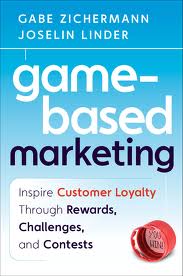
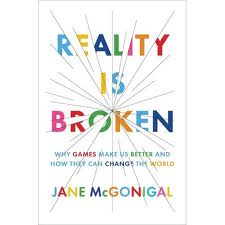
game.jpegRecent books such as Game-based Marketing by Gabe Zichermann and Reality is Broken by Jane McGonigal have highlighted why and how gamification can be a powerful tool if used right.reality.jpeg

Gabe also hosted the first Gamification Summit in San Francisco earlier this year and is hosting a series of Gamification Workshops for those interested in learning more about Gamification.

Many major companies (e.g., NBC Universal and CBS Interactive) are embracing gamification with great success.

As always, along with the great business opportunities come some legal issues of which companies need to be aware. One of the issues, which relates to issuing points or other things of value to reward consumers for creating product reviews or recommendations, was addressed in one of our prior posts relating to the FTC Endorsement Guidelines. A more recent post addresses some recent enforcement actions by the FTC and NY State for violations of these principles.

A number of other legal issues can arise. Additionally, we are seeing a rapid uptick in the number of patent applications being filed for gamification technology and business methods. For example, there are a number of companies offering gamification platforms. One that has an interesting business model is Big Door Media. Big Door offers free APIs and widgets to enable you to easily and cost effectively get started. Bunchball and Badgeville also offer gamification platforms and tools.

Like other cutting edge business models, gamification requires a well thought out business strategy and an understanding of the relevant legal principles!

Posted

We have previously posted about some of the often overlooked requirements of the FTC Endorsement Guidelines. Recent actions show that the FTC and other regulatory authorities are getting serious about enforcement.

In March 2011, a company selling a popular series of guitar-lesson DVDs agreed to $250,000 to
settle Federal Trade Commission charges that it deceptively advertised its
products through online affiliate marketers who falsely posed as ordinary
consumers or independent reviewers. According to the FTC release:

The Learn and Master Guitar program promoted by Legacy Learning and Smith is
sold as a way to learn the guitar at home using DVDs and written materials.
According to the FTC’s complaint, Legacy Learning advertised using an online
affiliate program, through which it recruited “Review Ad” affiliates to promote
its courses through endorsements in articles, blog posts, and other online
editorial material, with the endorsements appearing close to hyperlinks to
Legacy’s website.  Affiliates received in exchange for substantial commissions
on the sale of each product resulting from referrals.  According to the FTC,
such endorsements generated more than $5 million in sales of Legacy’s
courses.

The FTC’s revised guidelines on
endorsements and testimonials, issued in 2009,
explain in general terms when the agency may find endorsements or testimonials unfair or deceptive.
Under the guidelines, a positive
review by a person connected to the seller – or someone who receives cash or
in-kind payment to review a product or service – should disclose the material
connection between the reviewer and the seller of the product or service.

“Whether they advertise directly or through affiliates, companies have an
obligation to ensure that the advertising for their products is not deceptive,”
said David Vladeck, Director of the FTC’s Bureau of Consumer Protection.
“Advertisers using affiliate marketers to promote their products would be wise
to put in place a reasonable monitoring program to verify that those affiliates
follow the principles of truth in advertising.”

In August 2010, a public relations agency hired by video game developers agreed to pay $250,000 to settle Federal
Trade Commission charges that it engaged in deceptive advertising by having
employees pose as ordinary consumers posting game reviews at the online iTunes
store, and not disclosing that the reviews came from paid employees working on
behalf of the developers. The company also agreed to set up a monitoring program to ensure compliance going forward.

Other regulators have taken similar actions. In 2009 Lifestyle Lift, a cosmetic surgery company, paid $300,000 to settle with the
State of New York over its attempts to fake positive consumer reviews on the
Web regarding the results of face-lift procedures. .
Many aspects of social media provide great business opportunities, but it is important to ensure that your use, and your employee’s use, of social media is done in way that does not create legal liability.

Posted

Originally posted on the Gamification Blog.

Many people are aware that in 2009,
the FTC implemented guidelines that addressed the use of endorsements and testimonials by bloggers. The main stream press highlighted just the part of these guidelines that require disclosure by bloggers of compensation received for recommending a product or service. However, the guidelines include some lesser known provisions which apply more broadly to consumer generated media and relate to gamification.

  • The guidelines are not limited to bloggers, but cover any advertising message,
    including consumer-generated media,
    that consumers are likely to believe reflects the opinions, beliefs, findings,
    or experiences of the endorser. This includes consumer testimonials, such as reviews or recommendations endorsing a product or service on any social media site, not just blogs.
  • When a connection exists between the endorser and the seller of an advertised product that might materially affect the weight or credibility of the endorsement, such connection must be fully disclosed. In one example, the FTC says that if a blogger gets a free video game to evaluate and review, he must clearly and conspicuously disclose that he received the game for free. In another example, it states that if someone receives redeemable points each time they tell friends about a product, this fact needs to be clearly and conspicuously disclosed.
  • In these examples, the FTC also states that the company needs to advise the consumer giving the testimonial that this connection should be disclosed,
    and it should have procedures in place to try to monitor the consumer’s postings for compliance.
  • Advertisers are subject to liability for false or unsubstantiated statements made through endorsements, or for failing to disclose material connections between themselves and their endorsers. Endorsers may also be liable.
  • Whenever an advertisement represents, directly or by implication, that the endorser is an expert with respect to the endorsement message, then the endorser’s qualifications must in fact give the endorser the expertise that he or she is represented as possessing with respect to the endorsement. This raises potential gamification issues with leader boards, badges and expert status to the extent that this implies an “expert”
    status that the user does not actually posses.

This is just one of many examples of little known laws that relate to gamification.