Posted

In late June, Universal Music Group (UMG) Records, Sony Music Entertainment, and other major record labels filed two complaints against two generative artificial intelligence (“gen AI”) music startups, Suno, Inc. (Suno) and Uncharted Labs, Inc. (Udio). The concurrently filed complaints allege that the gen AI technology produced by Suno and Udio directly infringes on copyrights owned by these record labels.

Colleagues Shani Rivaux, Macarena Fink and Catherine Perez provide a briefing on these complaints in their recently published client alert, “Legal Riffs: Music Industry Alleges AI Is Out of Tune.”

Posted

On May 23, the House Subcommittee on Innovation, Data and Commerce advanced out of committee the American Privacy Rights Act (APRA), a draft piece of legislation to establish a federal data privacy standard in the United States. The legislation now moves to the full Energy and Commerce Committee for markup. Several changes were made in the draft legislation during the markup process, but the section containing a groundbreaking set of private right of action remains unchanged.

In the Cybersecurity Law Report, colleagues Shruti Bhutani Arora and Christine Mastromonaco discuss the details of the APRA’s private right of action, the remedies available to individuals and the preemptive effect of the APRA.

Click here to read the full article.

Posted

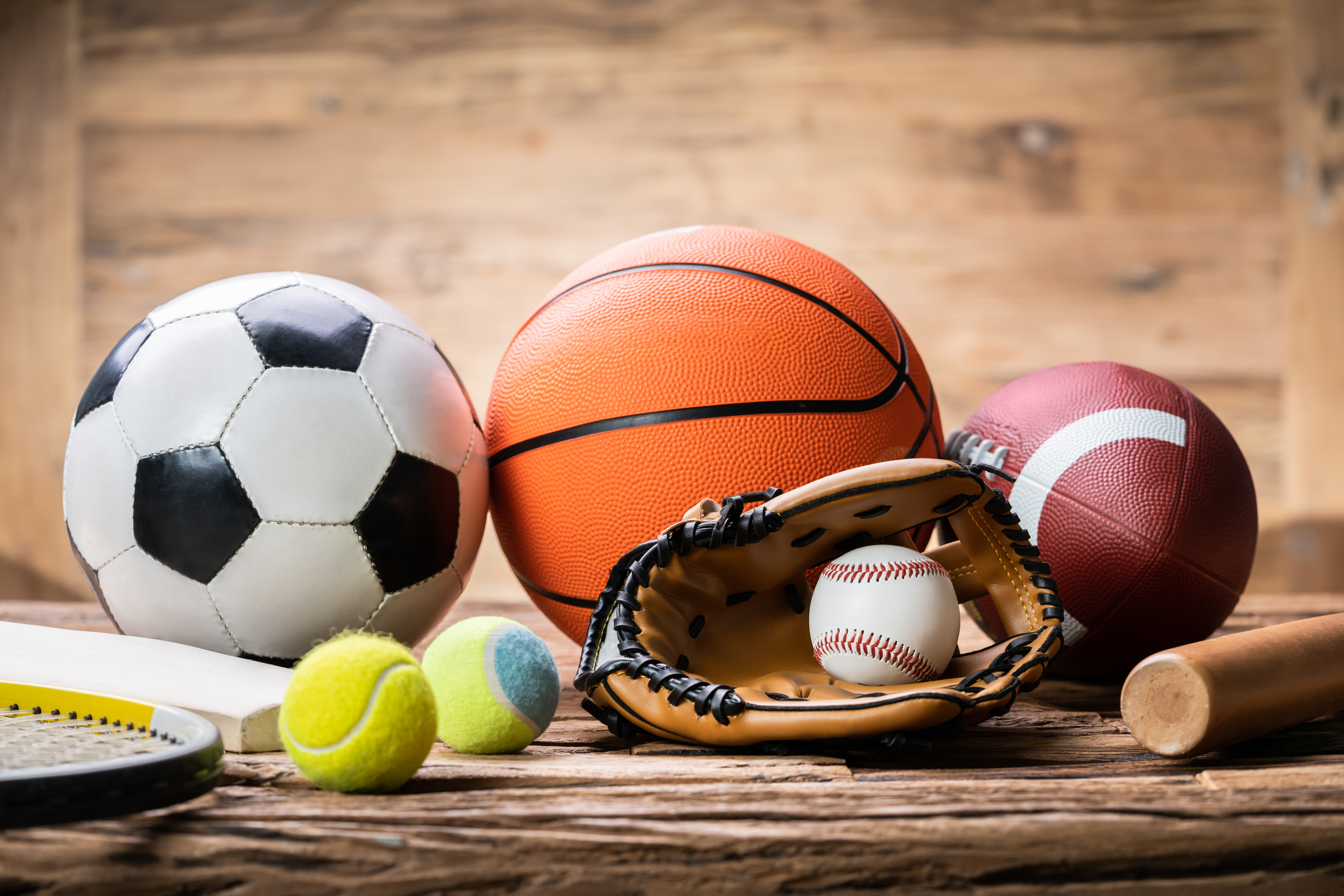
sports-NIL-1188462138-300x200Developments in the world of name, image and likeness (NIL) rights continue to occur at an extremely swift pace.

Within the last two weeks, Virginia amended its existing NIL laws to significantly strengthen student-athlete NIL rights, and the NCAA adopted new NIL rules designed to allow schools to support student-athlete NIL endeavors. The NCAA also relaxed the NIL disclosure requirement adopted in January and announced it had selected Teamworks Innovations to build and maintain its NIL database.

Continue Reading →

Posted

Testing AI systems is essential for ensuring their effectiveness, reliability and safety in real-world applications. Companies can employ various mechanisms to rigorously evaluate their AI technologies.

In “Is Your AI Testing Tool a Breach of Contract Claim Waiting to Happen?”, colleagues Mia Rendar and Sam Reno explore how, as AI products grow in both popularity and technical complexity, and as robust testing tools become indispensable, the very utilization of such tools may unwittingly expose companies to legal risks.

Posted

The potential of artificial intelligence to transform industries is well-established, but what exactly does that mean for a specific industry?

For Pratt’s Energy Law ReportRobert A. JamesAimee P. GhoshCara M. MacDonald and the Hon. Jerry McNerney take readers on a deeper dive exploring the opportunities, risks and regulations in the specific applications of artificial intelligence to renewable energy and to the electric power ecosystem into which renewables fit.

Read “Artificial Intelligence in Renewable Energy” now.


Posted

Reflecting the growing concern with cybersecurity threats associated with Internet of Things (IoT) products, the Federal Communications Commission (FCC) adopted rules at its March 2024 meeting to implement a new Voluntary Cybersecurity Labeling Program. The new label— “U.S. Cyber Trust Mark”—will be affixed on wireless consumer IoT products that go through the voluntary review program to ensure that the products comply with baseline cybersecurity criteria established in the September 2022 NIST Report 8425.

In “FCC Announces Consumer IoT Cybersecurity Labeling Program,” Brian E. Finch, Glenn S. Richards and Lee G. Petro take a closer look at the new program.

Posted

With millions of people already using artificial intelligence (AI) to perform a variety of personal tasks and companies integrating large language model (LLM) services for professional use, concerns over the frequency with which generative AI produces inaccurate content—and for users who may too readily assume that the content is factual—are mounting, along with multiple examples of AI hallucinations and other misstatements. Some are disastrous, others humorous and some, just creepy. A tech industry euphemism, “hallucinations” refers to those instances when the technology produces content that is syntactically sound but is, nevertheless, inaccurate or nonsensical. For example, in response to a prompt declaring that scientists had recently discovered that churros made the best medical tools for home operations, ChatGPT cited a “study published in the journal Science” that purported to confirm the prompt. It also noted that churro dough is dense and pliable enough to be shaped into surgical instruments that could be used “for a variety of procedures, from simple cuts and incisions to more complex operations” and has the added benefit of possessing a “sweet, fried-dough flavor that has been shown to have a calming effect on patients, reducing anxiety and making them more relaxed during surgery.” ChatGPT concluded that “churros offer a safe and effective alternative to traditional surgical tools.”

Continue Reading →

Posted

On December 5, 2023, the U.S. Court of Appeals for the Second Circuit affirmed a temporary restraining order and preliminary injunction secured by skateboard apparel company Vans against, MSCHF, an infamous parodist company. The Court found that the district court had correctly concluded that Vans was likely to succeed on its trademark infringement claims against MSCHF for its Wavy Baby sneakers, which allegedly parodied Vans’ iconic “Old Skool” sneaker design.

Continue Reading →

Posted

On December 11, the Review Board of the U.S. Copyright Office affirmed the refusal to register yet another AI-generated work. The decision follows the Office’s refusal to register Dr. Stephen Thaler’s A Recent Entrance to Paradise (which was affirmed in federal court, reported here, and is on appeal to the U.S. Court of Appeals for the District of Columbia), Kris Kashtanova’s Zarya of the Dawn (reported here), and Jason Michael Allen’s Théâtre D’opéra Spatial.

Continue Reading →

Posted

On October 18, 2023, the U.S. Court of Appeals for the Federal Circuit reversed and remanded a U.S. Trademark Trial and Appeal Board (TTAB) decision in Great Concepts, LLC v. Chutter, Inc., in which the Board canceled Great Concepts’ trademark registration based on a fraudulent Section 15 declaration of incontestability. In doing so, the Federal Circuit held that the TTAB lacks authority to cancel a registration based on a fraudulent incontestability declaration, closing the door to cancellation claims premised on fraudulent statements on which the USPTO did not rely either to issue or maintain a registration.

Continue Reading →