 Internet & Social Media Law Blog



Please join us on May 1-2 at the Neurogaming 2013 Conference and Expo : where your mind and body meet game play. 
-
Over 50 companies involved in neurogaming
-
Coolest neurogaming technologies
-
Over a dozen mind blowing panels
-
Insight into how neurogame design work
Neurogame developers are using the latest emotional, cognitive, sensory and behavioral technologies to create radically compelling experiences to engage and entertain gamers worldwide. You’ll experience everything from brain-controlled games to true augmented virtual reality experiences and even cognitive enhancing devices that send mild electrical pulses to your brain to improve concentration during game play, and so much more.
· NeuroGaming 2013 Conference will bring together all the players from across the emerging neurogaming industry and beyond to share insights and visions. Meet with the key people who are coming together for this first ever event including rock star CEOs, VPs of corporate development, venture partners, angel investors, VP Monetization, game designers, game producers, and more.
· NeuroGaming 2013 Expo will let you get your hands and minds on all these amazing new neurogaming technologies. We are bringing together all these cool technologies for you to play with in a floor expo that will blow your mind.
James Gatto will be moderating the first panel of the conference titled, “The Next Interface: Sensory Gaming Platforms” which is scheduled for 10:15am, Wednesday, May 1. The panelists are:
- Stanley Yang, CEO and Founder, Neurosky
- Anders Grunnet-Jepsen, Perceptual Computing Lead, Intel
- Amir Rubin, CEO and Founder, Sixense Entertainment
- Ali Israr, Immersive Gaming Lead, Disney Research
This panel will discuss how new sensory gaming technologies like gesture and voice control, brain-controlled feedback, haptic stimulation and other sensors, are transforming the gaming experience.


 The Federal Financial Institutions Examination Council (FFIEC) has released proposed guidance on the applicability of consumer protection and compliance laws, regulations, and policies to activities conducted via social media by banks, savings associations, and credit unions, as well as nonbank entities supervised by the Consumer Financial Protection Bureau and state regulators. In a
  One of the most significant changes of the 2011 Leahy-Smith America Invents Act (“AIA”) takes effect on March 16, 2013 when the U.S. transitions from a “First-to-Invent” patent system to a “First-Inventor-to-File” patent system.
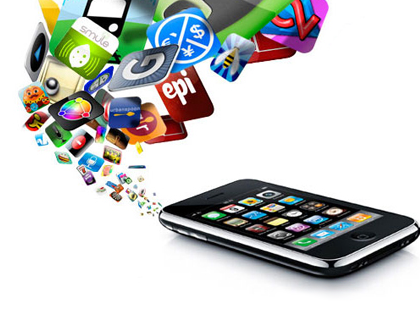 With numbers like these, it is clear that consumers are embracing the use of mobile apps at an ever growing rate. To meet this demand, developers are responding with a large selection of apps. As reported in an
  The 1988 Act was prompted due to the release of then Supreme Court nominee Robert Bork’s video rental history. Although there was nothing illicit in Bork’s video rentals, Congress noted the ease with which the information was located and disclosed.